
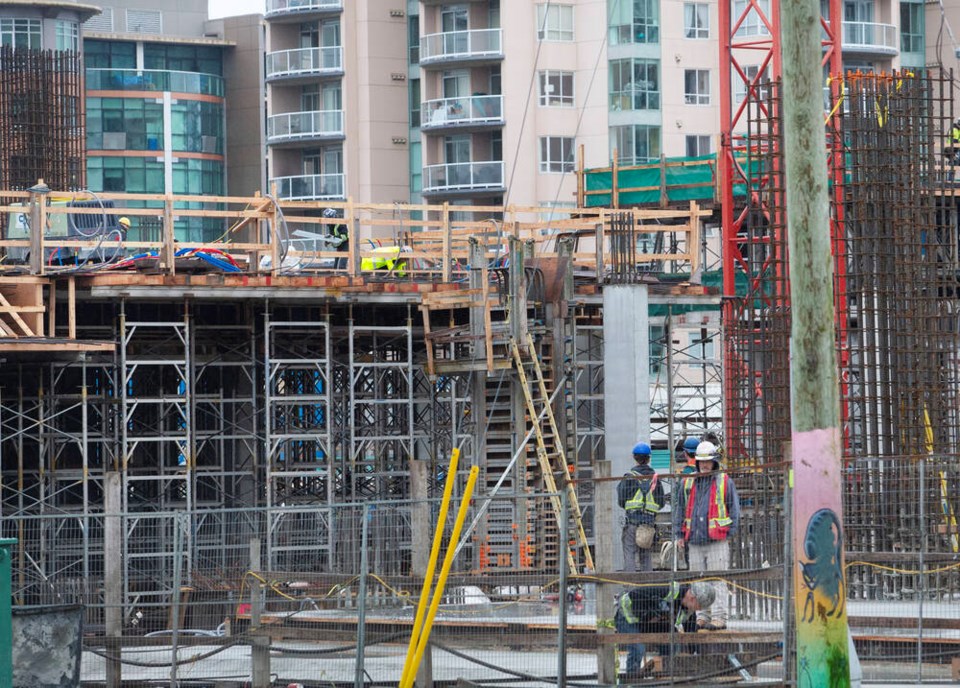
Comment: 'Streamlining' development can cause more problems
Protect the View Royal We Love
A commentary by a crisis communications and public relations professional, who is a former school trustee and board chair. This was originally posed on the Times Colonist here.
After years in public office and governance work, I have learned to pay attention when governments call something “streamlining.”
Bill M216, the proposed Professional Reliance Act, is being sold as a way to speed up housing approvals. In practical terms, it would shift authority from local governments to a system in which developers hire professionals to certify their own work.
That might sound technical.
It is not.
It changes who makes key decisions, who carries the risk and who answers when something goes wrong.
I served in local government as a school trustee and board chair. I now work in crisis communications and public relations and have served on several local and provincial boards.
Across those roles, I have seen the same pattern over and over. Safeguards that look cumbersome in a briefing note often turn out to be the things that prevent expensive, dangerous mistakes later.
That is why local review matters.
Municipal engineers, planners and inspectors are not there to gum up the works. They are there because development has consequences. Roads, drainage, fire access, structural integrity and environmental protection are not details to sort out after the fact.
Yet Bill M216 would require local governments to accept technical submissions from professionals regulated under the Professional Governance Act, rather than conducting their own detailed review.
Even the ability to require peer review, which many municipalities use as a common safeguard, could disappear.
Supporters say this will speed up approvals. In some cases, maybe it will. But anyone who has spent time around local government knows oversight is not just dead weight in the system.
Problems get caught there.
Drainage issues get identified before a neighbourhood floods. Structural concerns get raised before concrete is poured. Emergency access gets checked before people move in.
This is not ceremonial work. It is the ordinary business of risk management and public safety that local governments are elected to do.
Councils and boards are elected to make decisions about how communities grow and how risks are managed. If their role is reduced to absorbing the fallout from decisions made elsewhere, the local office means a lot less to voters than they were led to believe.
That is one reason the Union of B.C. Municipalities has warned that the bill could weaken oversight of new home construction and increase risks for taxpayers and homeowners.
Local government staff regularly identify deficiencies in applications that have already been certified by developers’ hired professionals.
Take away that scrutiny, and more will be missed. That should surprise no one.
What should also concern people is how this bill came about.
Legislation with serious implications for municipalities and public safety should come through the ministry responsible for housing and municipal affairs. It should be developed through consultation with local governments, regulators and the people expected to work under it.
Instead, this arrived as a private member’s bill from Nanaimo-Ladysmith backbench NDP MLA George Anderson.
On its face, this isn’t problematic. Any MLA can propose a private member’s bill.
For M216, however, a bill that so significantly changes responsibility and accountability for professional reviews of provincial housing development should be introduced by the Ministry of Housing and Municipal Affairs.
That it doesn’t leaves a basic question. If the ministry and minister responsible for housing and local government are not leading this file, who owns the consequences if it goes badly?
Governments say they care about accountability. Real accountability is more than a talking point. It requires clear lines of responsibility, clear authority and no ambiguity about who made the call.
This bill points in the opposite direction.
It also fits a broader pattern. For the past several years, the province has treated mayors and councils less like governing partners and more like obstacles to work around. Municipal oversight gets dismissed as red tape. The local process is framed as a delay. But many of those steps are exactly what keep infrastructure sound and communities safe.
Professional reliance can make sense in some regulatory settings. British Columbia already uses versions of it in limited circumstances. But applying that model across every municipality while stripping away local peer review is a much bigger move than the bill’s supporters seem willing to admit.
Even professional regulators have urged the province to pause and consult more broadly with municipalities, Indigenous governments and regulators before moving ahead.
That matters.
So does the fact that concern about Bill M216 is coming from people who actually work in these systems. This is a warning from people who know where failures happen and who end up living with them.
A bill like this should be built with the institutions that will have to carry its consequences. Bill M216 was not.
The province should pull the bill and start over, just as they did with the much-criticized Heritage Conservation Act. Consult municipalities. Consult Indigenous nations. Consult firefighters, inspectors, planners and the professionals who would have to operate under this model. Then come back with legislation that is clear, accountable and grounded in how local government actually works.
British Columbians who care about safe communities and accountable government should contact the premier and their MLA and say so.